In Brief
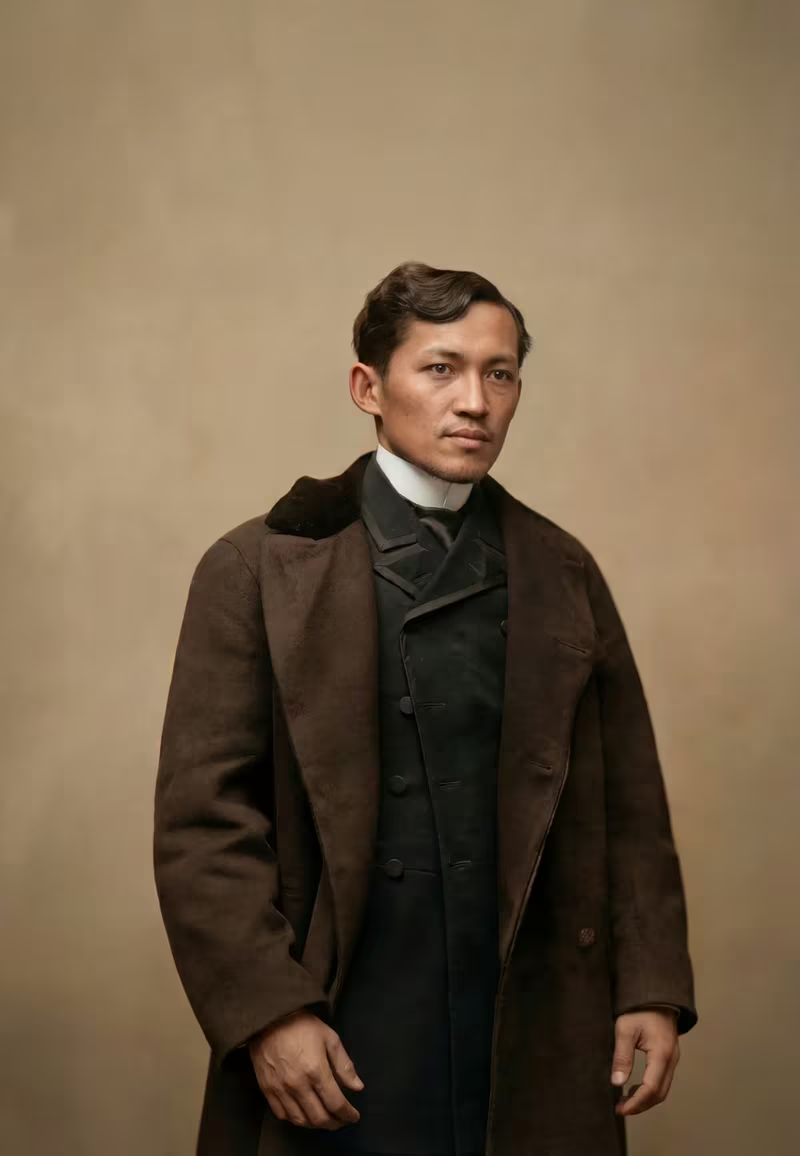
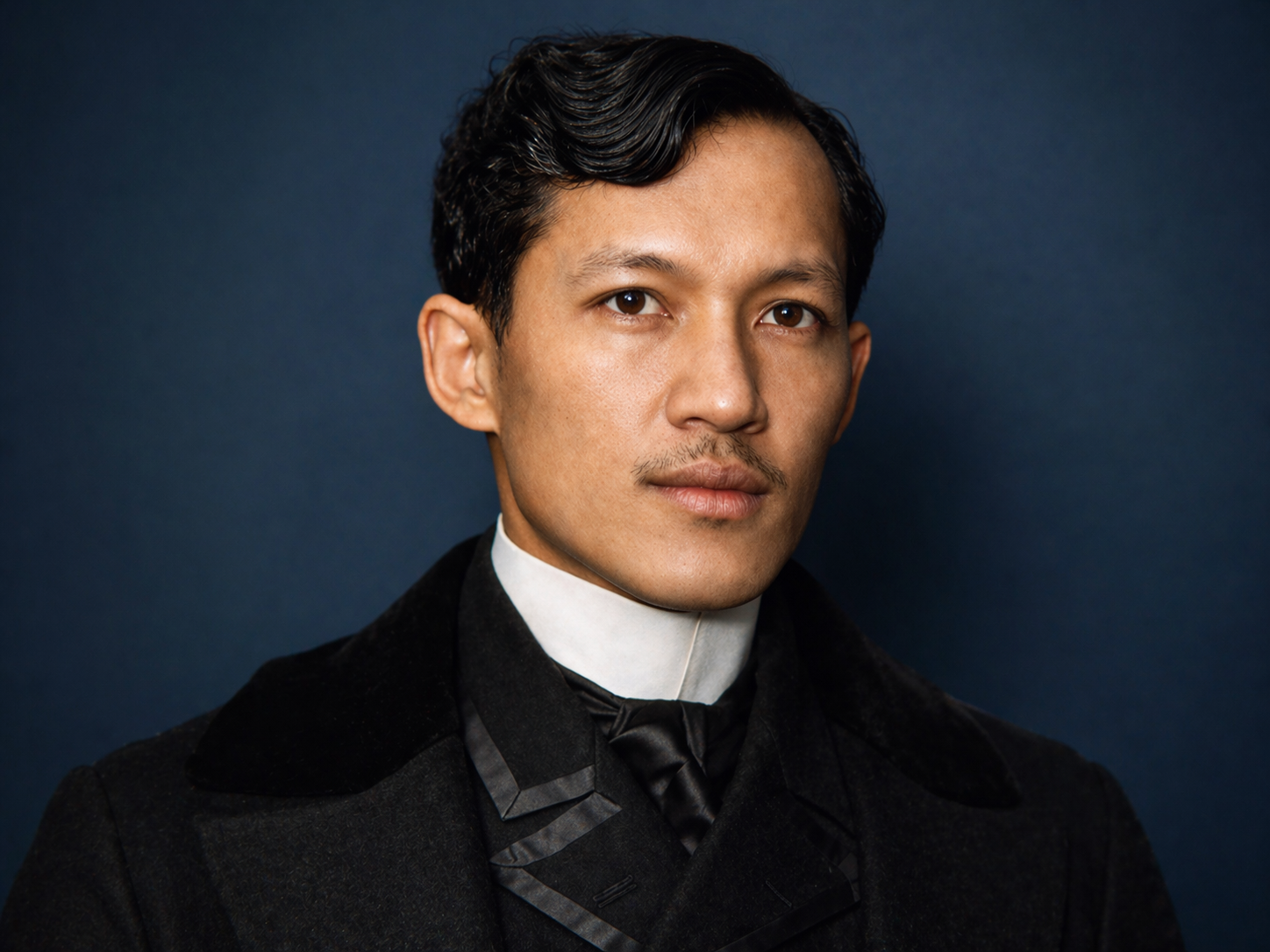
José Protasio Rizal Mercado y Alonso Realonda was born in Calamba, Laguna on 19 June 1861, the seventh of eleven children in a prosperous, deeply literate family of mixed Filipino, Chinese, and Spanish descent. He trained in medicine at the Universidad Central de Madrid and specialised in ophthalmology in Paris and Heidelberg — famously so that he might restore the failing sight of his own mother. Yet it was as a writer that he changed history.
His two novels, Noli Me Tángere (1887) and El Filibusterismo (1891), exposed the abuses of colonial and clerical rule with such precision that they were banned in the Philippines and read anyway. He founded La Liga Filipina in 1892 to press for peaceful reform; days later he was deported to Dapitan in Mindanao, where he spent four years as physician, teacher, farmer, and engineer. When revolution broke out in 1896 — a revolution he had not called for — he was tried by court-martial and shot at Bagumbayan on the morning of 30 December.
He was thirty-five years old. He is remembered as the national hero of the Philippines and, in the phrase of his biographers, the first Filipino — the first to imagine the archipelago's peoples as a single nation.
I.
The Life
From a comfortable Calamba household to the lecture halls of Madrid, Paris, and Heidelberg — the making of a Filipino polymath.
Read on →
II.
The Pen
Noli Me Tángere, El Filibusterismo, Mi Último Adiós, and the essays that gave a colony its political vocabulary.
Read on →
III.
The Field
Dapitan, arrest, the court-martial, and the dawn of 30 December 1896 at Bagumbayan.
Read on →
IV.
The Legacy
A hero remembered in law, in monuments, in schools, and in Filipino communities across the world.
Read on →
“The youth is the hope of our future.”
Rizal wrote in Spanish, Tagalog, French, German, and English; he studied and corrected the histories written about his own people. His annotated edition of Antonio de Morga's 1609 chronicle argued that the Filipinos possessed a civilisation long before the galleons came.
The Plates
Scenes from the Life
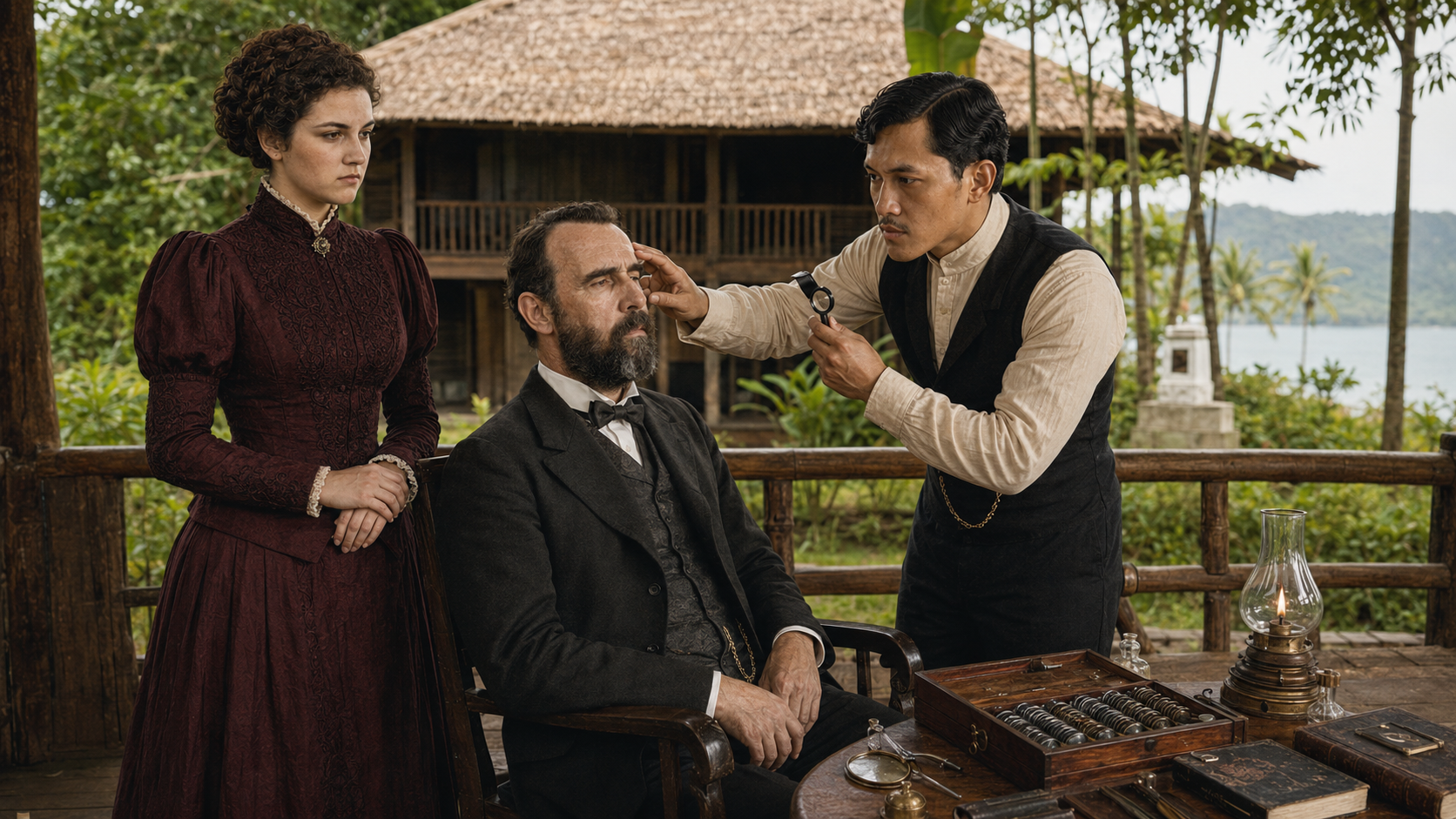
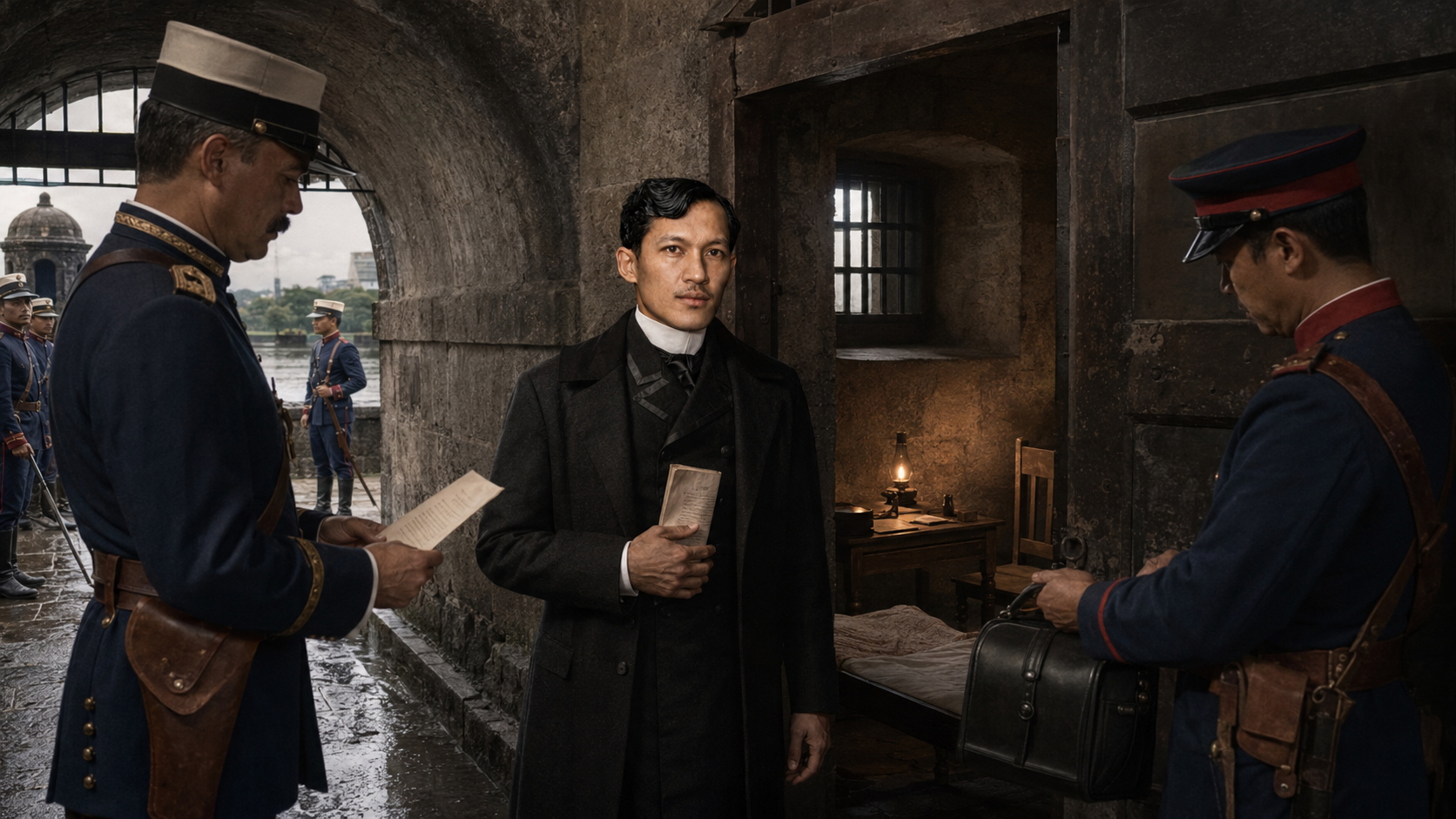
Madrid in the student years, the clinic at Dapitan, the wedding at dusk, the cell at Fort Santiago, and the monument at Luneta — a gallery of plates and moving scenes.
A Parlour Diversion
Do You Know the Hero?
Fifteen questions upon his life, his books, his exile, and his last morning. Every answer comes with its explanation.
Take the Trivia Quiz